
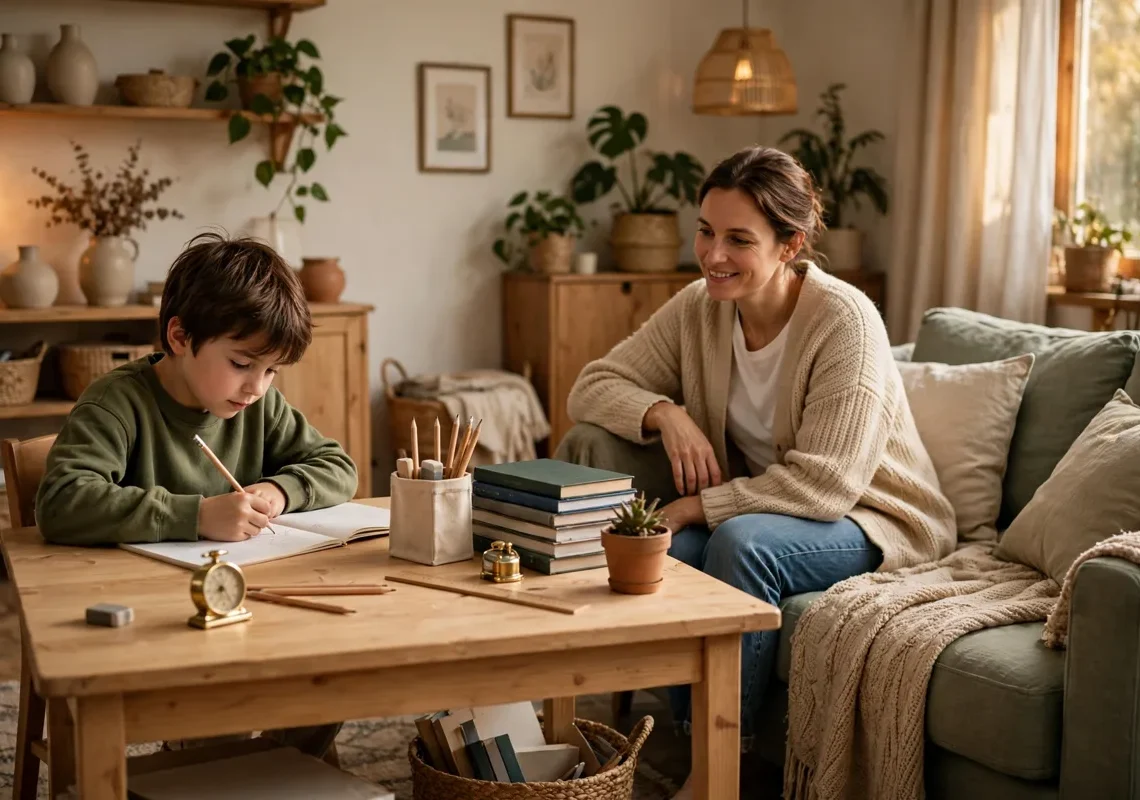
Most children do not struggle with homework because they are lazy. They struggle because nobody has taught them how studying is supposed to work: where it happens, when it happens, and what to actually do during those minutes at the desk. Building strong study habits for children is less about buying special equipment or enforcing marathon sessions and more about small, repeatable routines that make starting easy and finishing satisfying. This guide explains the habits that matter most and how parents can put them in place without turning home into a second school.
Why Habits Beat Willpower
Adults rely on routines for everything from exercise to saving money, because a habit removes the daily negotiation. Children are no different. When homework happens at the same time, in the same place, in the same order every day, the question changes from “do I have to?” to “this is just what we do after snack time.” That shift is the whole game. It also protects motivation: a child who enjoys learning, the goal behind our guide on fostering a love of learning in your child, keeps that spark far longer when study time feels predictable rather than like a daily battle.
Set a Consistent Time and Place
Choose a regular study window that fits your family’s rhythm: after a snack and some movement works well for younger children, while older ones may prefer a short break first. Anchor it to an existing event, such as “after dinner” or “after football practice,” because anchors are easier to keep than clock times.
The place matters just as much. A consistent, reasonably quiet spot with good light, ideally not the bed and not in front of the television, trains the brain to switch into work mode on arrival. Keep supplies in a small box or drawer nearby: pencils, paper, ruler, charger. Every trip to find a missing item is an invitation to drift, so removing those trips is a genuine study skill in disguise.
Keep Sessions Short and Focused
Young attention spans are short, and that is normal. For primary-age children, sessions of roughly fifteen to twenty-five minutes of real focus, followed by a short break, achieve far more than an hour of fidgeting. The rhythm used by the Pomodoro Technique, focused bursts separated by brief rests, adapts well to children when the intervals are shortened. A visible timer helps, because “ten more minutes” feels endless while a shrinking timer is concrete and fair.
During the session, one subject at a time. Multitasking is a myth for children and adults alike; finishing maths, then reading, then spellings gives three small completions, and completion is what builds confidence.
Teach Your Child What to Do While Studying
“Go and revise” is too vague to act on. Children need concrete moves:
- Start with the hardest task while energy is highest, and end with something they enjoy.
- Say it back: after reading a section, close the book and explain it aloud in their own words.
- Write, do not just reread: answering questions, making flashcards and summarising on paper all beat passive highlighting.
- Check and fix: reviewing marked work and correcting mistakes is where much of the real learning hides.
Older children can graduate to structured note systems such as the Cornell note-taking method, which turns a page of notes into built-in revision questions. The method matters less than the message beneath it: studying is an activity, not a staring contest with a textbook.
Protect Sleep, Movement and Downtime
Study habits for children succeed or fail on what happens outside the study session. Sleep is when the brain files the day’s learning away, so a regular bedtime is genuinely part of the study plan, not a separate topic. Daily physical play burns off the restlessness that makes sitting still feel impossible. And unstructured free time is not the enemy of achievement; it is the reward structure that makes the routine sustainable. Our suggestions for making learning fun for kids without pressure are full of ways to keep curiosity alive between the formal sessions.
Praise the Process, Not Just the Result
What parents praise, children repeat. “You kept going even when that problem was hard” teaches persistence; “you are so clever” teaches a child to avoid anything that might expose them as not clever. Notice effort, strategy and improvement out loud, and keep feedback specific. This connects directly with the habits in our guide to encouraging self-discipline and responsibility: children who learn to manage their own small routines grow into students who can manage bigger ones, including preparing independently when exam season arrives, as our guide to preparing for online exams assumes they eventually will.
When Your Child Resists: Handling Homework Battles
Even good routines meet resistance some days, and how parents respond in those moments decides whether the habit survives. Start by getting curious rather than louder: a child who refuses maths may be tired, hungry, or quietly stuck on something they are embarrassed to admit they do not understand. Fix the real cause first. A drink, a snack and ten minutes of fresh air solve more homework battles than any lecture.
If resistance is about the work itself, shrink the first step until it is almost impossible to refuse: “just write the date and the first answer, then we will see.” Momentum usually carries them further than the single step, and if it does not, one completed question is still a better ending than a standoff. Avoid turning study time into a power struggle you have to win; the routine should feel like the family’s normal rhythm, not a daily contest. When problems persist for weeks, a calm conversation with the teacher often reveals a mismatch, work that is too easy and boring, or too hard and frightening, that no home routine alone can fix.
Keep Screens in Their Place
Phones and tablets are the single biggest leak in most children’s study time, not because children lack discipline but because those devices are engineered to win attention. The simplest rule is physical: during the study window, the phone charges in another room, the television is off, and if a computer is needed for the work, unrelated tabs and notifications are closed. Making the rule about the environment rather than the child’s character keeps it enforceable without resentment, and it quietly models the same focus habits adults struggle to keep themselves.
A Gentle Two-Week Start
Do not rebuild everything at once. In week one, fix the time, the place and the supplies box, and keep sessions short. In week two, add one active study move, such as say-it-back after reading, and one weekly moment where your child shows you something they are proud of. Expect wobbles; a missed day is data, not failure. Within a month, most families find the routine runs itself, and study habits for children stop being a project and simply become how homework happens in your house.