
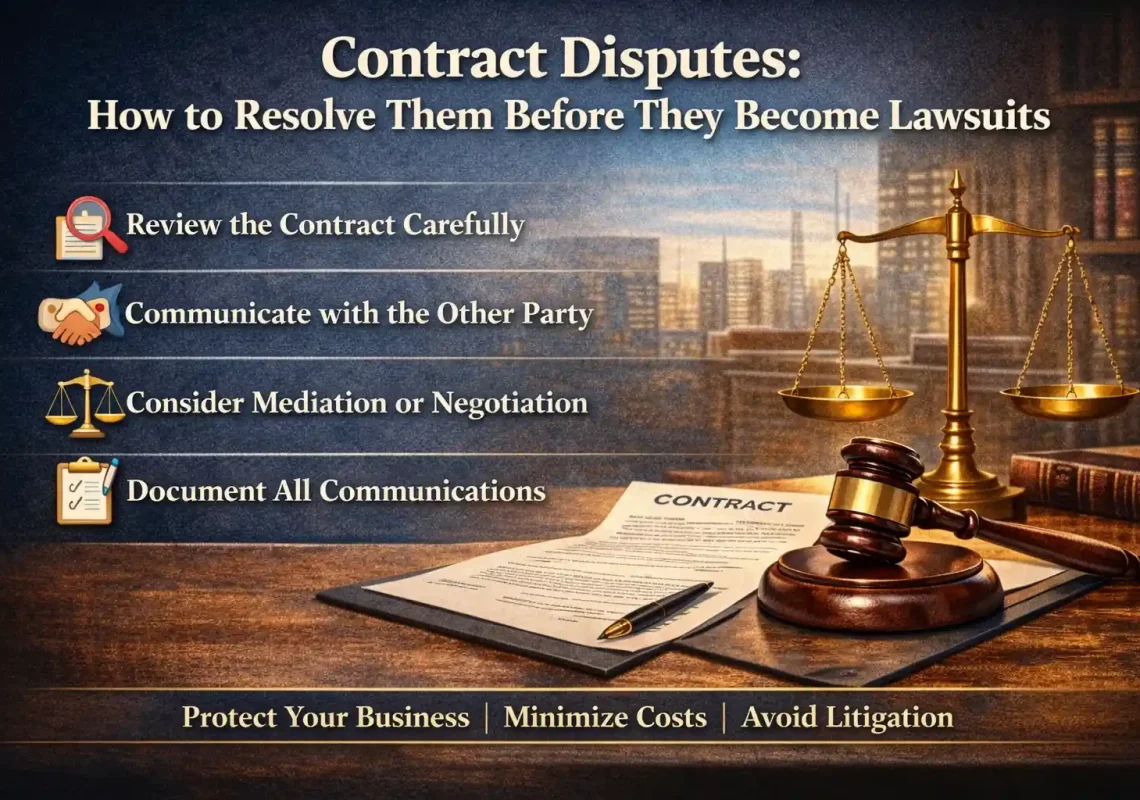
Contract disputes escalate quickly when you leave early problems unchecked. Missed deadlines, unclear terms and communication gaps can turn a simple issue into a lawsuit. Act at the first sign of trouble to protect your position and avoid costly proceedings. This article explains the main causes, early warnings and practical steps you can take to resolve disputes before they reach court.
Common Causes of Contract Disputes
Contract disputes rarely appear without warning. They usually stem from one or more identifiable causes, most of which can be mitigated with good contractual management.
Ambiguous Terms: Poor drafting often leads to conflicting interpretations. Vague terms around pricing, quality, or delivery standards give each party room to argue their version of the contract.
Missed Deadlines or Non-Performance: When one party fails to meet agreed obligations or timelines, trust erodes quickly. This is particularly common in supply chain and service contracts where delays have wider operational consequences.
Payment Disagreements: Late payments or disputes over the amount due often form the basis of legal claims. These can result from poor invoicing practices, unclear payment schedules, or differing interpretations of performance milestones.
Misrepresentation or Unmet Expectations: A dispute may arise when one party feels the other misled them during negotiations or failed to deliver as promised.
Breach of Confidentiality or Intellectual Property: In commercial partnerships, misuse of confidential information or intellectual property rights can cause serious damage and prompt legal action.
Early Warning Signs You Should Never Ignore
Spotting the signs of a potential dispute early can prevent unnecessary escalation.
- Breakdown in communication: Silence, delayed replies, or defensive responses are early signs of conflict.
- Repeated delays: Persistent missed deadlines or slow performance indicate possible non-compliance.
- Invoice disputes: Frequent arguments about amounts, deductions, or timing may reflect deeper contractual problems.
- Attempts to renegotiate: Sudden requests to alter pricing or delivery terms often signal that one party cannot fulfil their original commitments.
- Failure to meet obligations: When agreed terms are ignored, even partially, it’s time to act before it becomes a breach claim.
Recognising these signs and addressing them swiftly is the most effective way to maintain control.
Steps to Resolve Contract Disputes Before Litigation
Review the Contract
Start by analysing the written agreement itself. Identify the exact obligations of each party, the relevant clauses on breach, remedies, and dispute resolution procedures. Many contracts include clauses requiring mediation or arbitration before legal action. A detailed review ensures that any action you take is consistent with the contract’s terms and protects your legal position.
Open Direct Communication
A large proportion of contract disputes can be resolved through honest conversation. Reach out to the other party promptly and outline your concerns clearly. Focus on the specific issues rather than emotions or blame. In many cases, a misunderstanding or minor oversight can be resolved through direct communication, saving both time and expense.
Send a Formal Written Notice
If informal discussions fail, send a written notice outlining the breach, your interpretation of the relevant clause, and the corrective action expected. This demonstrates seriousness and creates a record of your attempt to resolve the matter. It also becomes crucial evidence should the dispute progress further.
Negotiate a Practical Settlement
When the dispute has a financial element, consider structured settlements or revised terms. For example:
- Adjusting payment schedules to ease cash flow issues.
- Agreeing new delivery timelines to accommodate supply chain delays.
- Offering partial performance in exchange for a reduced fee.
- Reinstating trust through transparent monitoring or reporting measures.
Negotiations should always be documented and, ideally, reviewed by legal counsel before finalisation.
Use Mediation to Avoid Escalation
Mediation is an effective, confidential process where a neutral third party helps both sides reach a voluntary resolution. It is faster and significantly cheaper than court action. The outcome is not imposed but mutually agreed, allowing business relationships to continue where possible. For ongoing partnerships, mediation often helps preserve commercial ties.
Consider Arbitration If Required
Arbitration can be an alternative to court proceedings, often stipulated within commercial contracts. It provides a binding decision from an impartial arbitrator but remains private, avoiding public exposure of business disputes. It can be faster than litigation and handled by industry specialists with a practical understanding of the issues.
How Solicitors Help Resolve Disputes Early
Engaging a solicitor early can prevent costly mistakes and help protect your business relationships. Civil litigation lawyers specialise in identifying legal risks before they escalate and guiding clients toward the most practical solutions.
They can:
- Interpret complex contract clauses and highlight where breaches have occurred.
- Draft formal notices that strengthen your legal standing.
- Lead settlement negotiations and ensure agreements are enforceable.
- Represent your interests in mediation or arbitration.
- Advise on the commercial risks of litigation and help you choose the most cost-effective route.
Civil litigation lawyers provide clear, structured advice backed by practical experience. Their objective view can defuse tensions and help turn a potential confrontation into a constructive resolution that protects your position and minimises long-term damage.
When Court Action Becomes Necessary
Although many disputes can be resolved informally, some require court proceedings. This may occur when the other party refuses to communicate, denies obvious obligations, or causes substantial financial loss. Urgent cases, such as breaches involving confidential material or asset removal, may require immediate court orders.
Businesses should also be aware of limitation periods. Claims must be filed within a specific timeframe, and delaying action may prevent recovery altogether. When litigation becomes unavoidable, early preparation improves the likelihood of a positive result.
Preventing Future Contract Disputes
The best defence against contract disputes is strong prevention. Businesses can reduce the risk by:
- Drafting clear and specific terms: Define obligations, deliverables, and timelines precisely.
- Including detailed payment and termination clauses: Avoid ambiguity about payment milestones, notice periods, or penalties.
- Regularly reviewing contracts: Update templates to reflect changes in law, pricing models, or business practices.
- Training staff on contract management: Ensure employees understand the terms they are managing or agreeing to.
- Documenting communications: Keep a paper trail of key discussions, amendments, and agreements.
- Using standard dispute resolution clauses: Require mediation or arbitration before court proceedings to save time and cost.
A culture of contractual awareness and accountability can dramatically reduce legal exposure and improve relationships with suppliers, clients, and partners.
FAQs
Can verbal agreements lead to contract disputes?
Yes. Verbal agreements can lead to disputes when parties disagree about what was promised. They are harder to prove than written contracts, so businesses should always record agreements in writing, even for small arrangements.
How long should I wait before involving a solicitor in a contract dispute?
You should involve a solicitor as soon as you recognise that communication is breaking down or the other party is denying obligations. Early legal advice helps protect your position and prevents avoidable mistakes.
What evidence should I gather when a dispute starts?
Collect the contract, emails, messages, invoices, meeting notes, delivery records and any proof of performance. Strong evidence strengthens your position during negotiations, mediation or formal proceedings.
Can contracts be amended after a dispute begins?
Yes, if both parties agree. Many disputes are resolved by revising terms to reflect current circumstances. Any change should be recorded in writing and signed by both parties to avoid future problems.
Is it possible to keep a contract dispute confidential?
Yes. Negotiations, mediation and settlement agreements can remain private. Even in arbitration, confidentiality is common. Court proceedings, however, are generally public unless specific circumstances justify restrictions.
As the leaves turn to vibrant hues, exploring the best places to visit in the fall US promises unforgettable memories and breathtaking sights that capture the essence of the season.
As the landscape of employment law continues to evolve, employers must remain vigilant about the complexities surrounding the sponsorship of foreign workers. A sponsor licence is a crucial requirement for companies looking to hire international talent, but navigating the associated regulations can be fraught with challenges. Many businesses underestimate the potential consequences of failing to comply with these regulations, which can lead to severe penalties and operational disruptions. In this article, we will delve into common sponsor licence legal pitfalls that employers should be aware of, ensuring that you are equipped with the knowledge to protect your organization and its future. Understanding these pitfalls is not just beneficial but essential for maintaining a compliant and successful hiring process.