
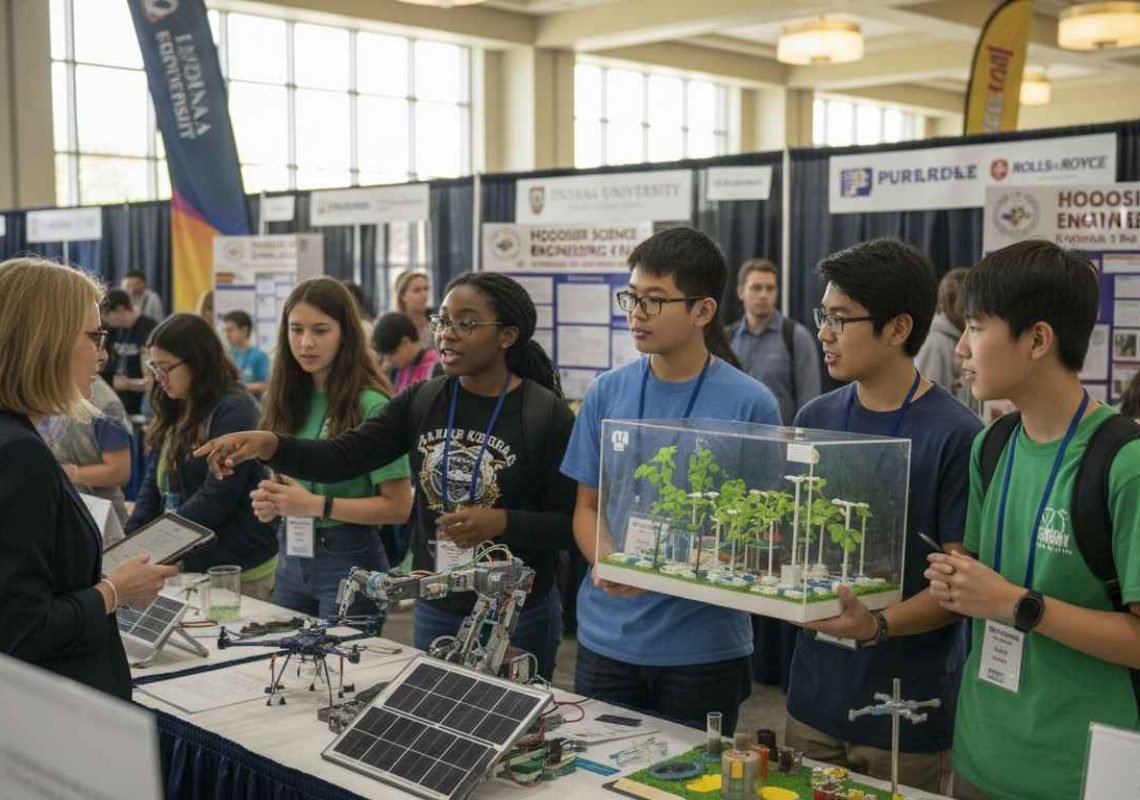
Struggling to find authentic platforms that foster genuine STEM talent, encountering an overload of online competitions with minimal real-world impact, and facing the challenge of connecting young innovators with mentors who can propel their ideas into practical application – these are hurdles many aspiring scientists and engineers confront today. For students in Indiana, the Hoosier Science and Engineering Fair emerges as a solution, providing a structured, rigorous environment to cultivate skills, test ideas, and receive recognition for hard work and ingenuity.
Much like an investment portfolio, the fair represents a strategic allocation of time, effort, and resources across various categories of science and engineering disciplines. Students enter projects ranging from environmental research to robotics, each with potential for high returns in knowledge, problem-solving ability, and career readiness. Understanding the structure, history, and impact of this fair can guide educators, parents, and students in maximizing their involvement.
Timeline of the Hoosier Science and Engineering Fair
1964: The inaugural fair is established, creating a statewide forum for student-led research in Indiana. Initial participation is limited but lays the groundwork for broader engagement.
1970s: Expansion of project categories includes biology, chemistry, and physics. Partnerships with local universities increase mentorship opportunities for students.
1980s: Introduction of specialized awards for innovation and practical application encourages interdisciplinary projects.
1990s: Technological integration allows students to present digital and engineering-based projects, reflecting the growing influence of computing in scientific inquiry.
2000s: Collaborations with industry leaders provide scholarship opportunities and professional networking, further solidifying the fair as a launchpad for future innovators.
2010s: Emphasis on STEM diversity initiatives ensures wider participation from underrepresented groups, broadening the talent pool and fostering inclusive innovation.
2020s: Integration of virtual presentations expands accessibility, allowing students to participate despite geographical or logistical constraints.
Strategic Portfolio of Categories and Opportunities
Like constructing a balanced investment portfolio, the fair encourages participants to diversify their focus across multiple scientific disciplines. Categories include biological sciences, chemical engineering, environmental science, computer science, and robotics. Each category carries distinct skill requirements and potential career pathways, making the choice of project a critical decision akin to choosing investment assets with different risk-reward profiles.
Biological sciences, for instance, emphasize rigorous experimental design and data analysis. A project examining the impact of novel compounds on cellular growth provides exposure to laboratory techniques and research methodology. Chemical engineering projects often require proficiency in process modeling and materials evaluation, providing a bridge between theoretical knowledge and practical application. Environmental projects simulate real-world challenges, teaching students about sustainability, data collection, and community impact assessment. Robotics and computer science projects integrate coding, mechanical design, and systems engineering, reflecting the growing importance of interdisciplinary problem-solving.
Dr. Emily Harrison, an urban planning expert with over 15 years of experience mentoring STEM competitions, notes, “Students who approach the Hoosier Science and Engineering Fair with a clear project strategy develop both analytical and practical skills. They learn not just science, but project management, critical thinking, and the art of presenting complex ideas in a digestible format.”
Mentorship and Resource Allocation
Successful participation is not solely about the quality of the experiment; it is also about how students leverage mentorship and resources. Schools, universities, and research institutes provide guidance on project design, access to specialized equipment, and opportunities to validate findings. This mentorship functions much like external funding in an investment portfolio – amplifying potential outcomes and reducing the risk of project failure.
Organizations such as Apexbt offer research tools, compounds, and assay kits that can enable high-level scientific experimentation. By providing access to advanced resources, these partnerships elevate the scientific rigor of student projects, ensuring that innovative ideas are not limited by resource constraints.
Recognition and Real-World Impact
Participants in the Hoosier Science and Engineering Fair receive awards and scholarships that can influence educational and professional trajectories. More importantly, they gain exposure to scientific thinking and problem-solving that extends beyond the competition. A student who develops a novel algorithm for energy-efficient building design, for example, may find their project influencing sustainable urban planning or technological startups. The fair’s recognition is a form of intellectual capital, translating early efforts into measurable long-term benefits.
Potential Drawbacks and Who Should Avoid This
While the fair offers significant opportunities, it is not without challenges. Students who are unable to commit significant time or lack access to basic laboratory or computational resources may find themselves at a disadvantage. Additionally, projects that rely heavily on group work without clear individual contribution risk diluting personal skill development. Educators and parents must weigh these factors before encouraging participation, ensuring the experience is aligned with the student’s capacity and interests.
Moreover, while competition drives excellence, it can also introduce stress that may not suit every student. Balancing ambition with personal well-being is essential to ensure that participation remains a positive learning experience rather than an overwhelming pressure point.
Conclusion
The Hoosier Science and Engineering Fair represents more than just a statewide competition – it is a carefully curated ecosystem that mirrors the strategy and foresight required in building a successful investment portfolio. By strategically selecting project categories, leveraging mentorship, and accessing resources, students can maximize both educational and real-world returns. The fair’s history, growing diversity, and integration with professional resources make it a cornerstone of STEM development in Indiana, equipping the next generation of scientists, engineers, and innovators with the skills and recognition they need to succeed.