
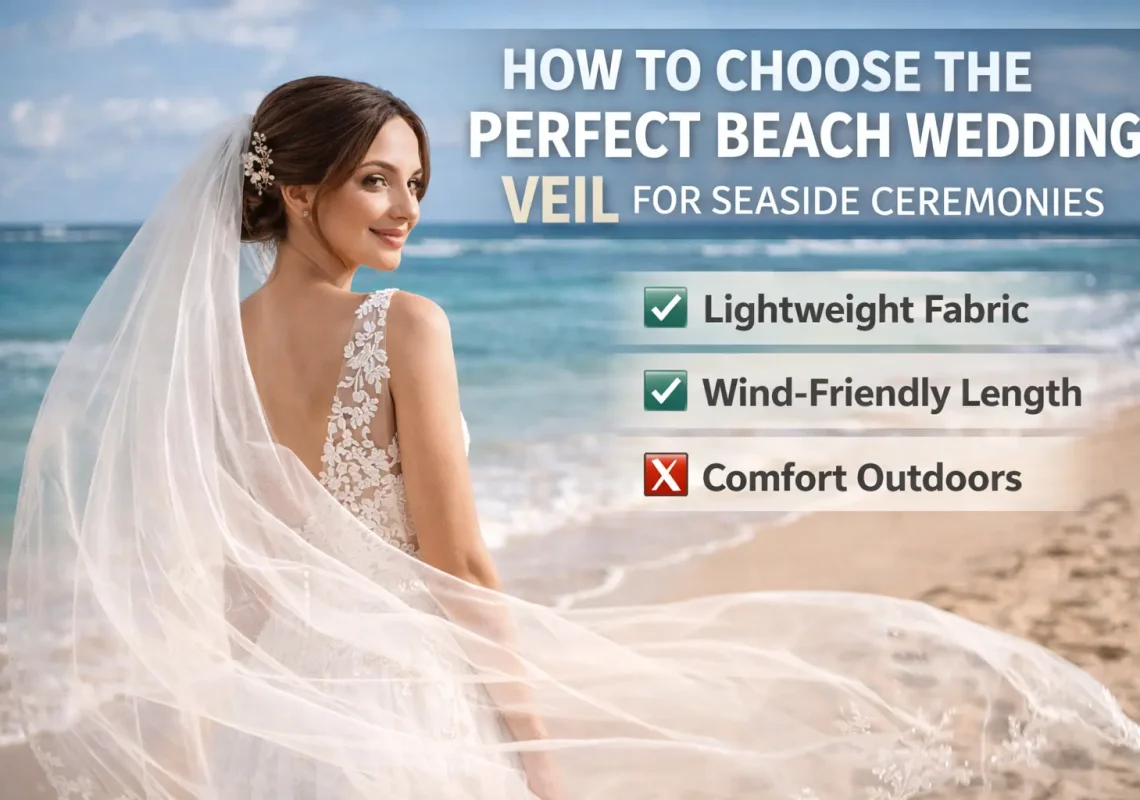
Beach weddings have their own rhythm. Sea breeze, salt in the air, natural light, and open space all affect a bride’s dress and accessories. The veil, in particular, must suit both the visual tone of the setting and the practical conditions of a shoreline ceremony. Brides often picture effortless movement in the wind, but without the right materials and structure a veil can tug, lift, tangle, or distract during the event.
This article explains what matters, why it matters, and how to make thoughtful choices so the veil feels natural rather than stressful.
What Makes a Veil Beach-Friendly
Fabric
Fabric choice has a major impact on comfort and movement outdoors. Lightweight soft tulle, netting, and chiffon feel more breathable in warm climates and create subtle motion that works well with sea wind. Heavier tulles, thick jacquard, and stiff lace can feel warm near the scalp and may resist motion in a way that looks rigid in photos.
Brides who want lace often lean toward narrow lace borders or airy chantilly patterns so they do not trap heat or weigh the veil down. Fabrics with high shine can reflect harsh midday light near the ocean, so soft-sheen surfaces photograph better in natural daylight.
Length
Length determines both the mood of the veil and how it behaves in outdoor settings. Fingertip and shoulder lengths are common for lightweight veils for beach weddings because they look elegant without dragging through sand. Ballet length works as a middle option that gives more drama without the obstacles of a full cathedral.
For brides who still want cathedral length on the beach, it helps to choose lightweight cuts that lift easily and stay in motion rather than collapsing into the sand. Short cathedral designs with minimal trim have become popular for shore weddings because they feel grand but still practical.
Securing the Veil
An outdoor ceremony needs stability. The comb is the anchor point, so strong metal combs hold better than lightweight plastic ones in a breeze. Brides who wear their hair down often add hidden pins or small anchor combs to support the primary attachment point. Updos provide natural hold, but they are not mandatory. Loose beach hairstyles can still support a veil if pins are placed strategically and the comb teeth point downward into the hair for grip. Stylists often do a “wind check” during trials so the bride can see how easily the veil lifts when air moves across the crown.
Color and Tone
Beach light reflects off water, sand, and sky, which can shift color perception in photos. Ivory remains the most common bridal veil color, though champagne and soft sand tones have gained popularity for oceanside weddings because they sit well against both sunlight and late afternoon shadows. Pure white can appear sharp or cool when photographed under direct sunlight. Brides wearing gowns with nude linings or sheer corsetry can pair them with soft neutral veils that keep the overall look consistent in natural outdoor lighting.
Styling for the Beach
Dress Compatibility
The dress and veil should work as a complete look. Minimalist gowns pair well with clean veil edges, plain cuts, and modern tulle that does not interfere with the structure of the dress. Boho gowns, often in lace or crochet, look good with narrow lace trims, soft scalloping, or barely-there pearl details. Brides who want seaside glamour add sparkle through micro-beading, pearls, or shimmer, but always with restraint so that heat and weight do not create discomfort.
Movement for Photos
Movement is the reason many brides choose to wear a veil on the beach. Light materials lift naturally and fold into soft shapes when the wind catches them. Denser fabrics become unpredictable in gusts and may swing forward toward the bride’s face. Photographers often welcome veils that catch gentle air since it helps create motion in portraits and ceremony shots. The key is selecting a veil that stays behind the shoulders during vows and does not slap into the bouquet or microphone during readings.
Trim and Embellishment
Trim should be practical and lightweight. Narrow lace, cut edges, raw edges, and thin ribbon borders are all common for seaside locations. Heavy trims weigh the veil down and can collect sand. Beading should be small and distributed sparingly so it does not create tension points where the veil folds. Subtle shimmer works beautifully during golden hour, but midday sunlight can reflect off beads intensely, so testing in natural light beforehand is helpful.
Practical Considerations Outdoors
Comfort and Heat
Open-air weddings can feel warm, so breathable fabrics matter more than in indoor settings. Brides often appreciate veils with single layers instead of two. Blushers are still possible, but many opt out due to heat and movement. If a blusher is important for tradition, lighter netting keeps it from sticking to lipstick, sunscreen, or dewy skin.
Snag Risks
Beach gowns frequently feature lace motifs, sequins, or textured beading. These details can catch the veil at the hip or train during the recessional. Clean edges reduce snagging, especially for brides with detailed skirts. If the dress has ornate appliqué, lifting the veil slightly during the walk prevents accidental tangling in front of guests.
Hair Pairing
Hair texture changes outdoors due to salt air and humidity. Loose waves may expand during the ceremony, which can shift the placement of the comb. Braids and low buns provide stronger support for the veil, but many brides still want loose hair for a coastal look. In that case, stylists often add small internal braids or anchors beneath the surface layer of hair to grip the comb securely without changing the visible style.
Personalization for Beach Brides
Location-Inspired Embroidery
Coastal weddings lend themselves to thoughtful customization. Brides increasingly request embroidery featuring seashells, waves, botanical motifs, initials, or wedding dates. Coordinates of the ceremony site have become a romantic detail for those who want a personal keepsake. These design notes create subtle storytelling without adding bulk to the veil.
Hem Shapes for Flow
Hem shape affects movement. Cut edges move like air and photograph beautifully on the beach. Slight scallops add softness without visual heaviness. Narrow ribbon hems create a defined outline that holds its shape in wind without stiffening the veil. Brides who prefer lace can choose lightweight borders that frame the veil rather than weigh it down.
Special Requests
Destination weddings require planning. Some brides request color matching for non-traditional gowns or alternative neutrals. Others ask for custom lengths that fall between standard sizes to suit the terrain. Fast-track production options matter for those flying internationally and needing guaranteed delivery before departure.
When a Veil Is Not Practical
Some brides decide the veil is not worth the effort in high wind. Alternatives include flower crowns, hair vines, circlets, capes, or detachable shoulder drapes. These options still create ceremony drama without the risk of airborne fabric. Brides who skip the veil often appreciate the freedom of movement, especially during receptions held outdoors.
FAQs
Can you wear a veil with a beach ceremony if the dress has no train?
Yes. Many brides pair short or fingertip-length veils with dresses that have no train for a clean, minimal look. This works well on sand because there is less fabric to manage, and the ensemble feels breezy and modern without sacrificing bridal detail.
Do beach wedding veils work well with non-bridal footwear like sandals or barefoot styles?
Absolutely. Shorter veils often pair well with barefoot and sandal styles because the visual attention shifts upward toward the hair and face. Brides who wear cathedral-length veils can still go barefoot, but they should be aware that sand may collect on the hem during the ceremony and photos.
Are detachable veils practical for beach venues?
Detachable options are popular among destination brides who want drama for the aisle but flexibility for the reception. A lightweight detachable cathedral can be removed after photos, leaving a short veil or no veil at all for dancing and movement.
Are two-tier veils suitable for beach weddings?
Two-tier veils, including those with blushers, are possible but require careful fabric selection to avoid heat or sticking to makeup. Soft net and single-layer blushers feel more comfortable in warm coastal locations than heavier double layers.
Do brides need to worry about veil weight during destination travel?
Veils travel well because they fold more easily than structured gowns. Lightweight tulles compress without harming the fabric. Heavier lace trims and dense beading require gentler packing, but they can be steamed or hung after arrival to release creases.