
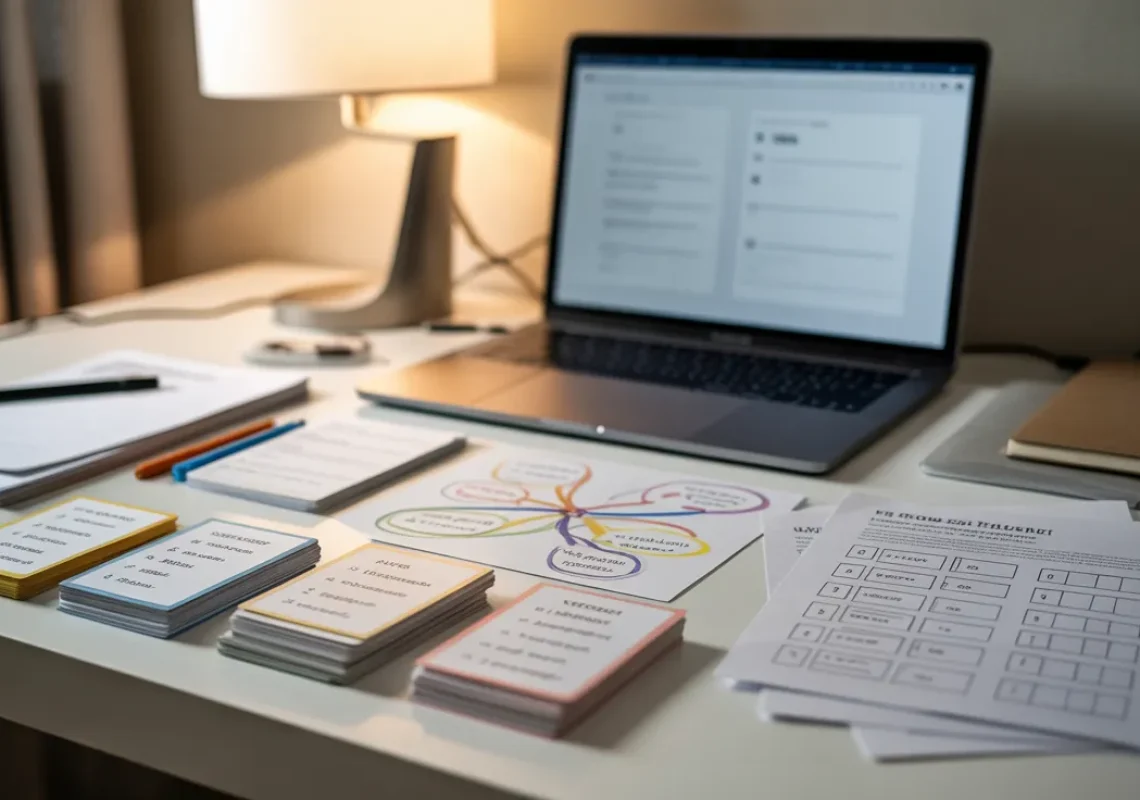
Imagine you’re sitting at your desk, the clock ticking relentlessly, and the pressure mounting as exams approach. The weight of impending assessments looms over you, and the fear of forgetting crucial information intensifies. In this high-stakes environment, every second counts, and every study session becomes a battle for retention. But what if there were tools designed to combat this very challenge? Tools that not only aid in memorization but also enhance understanding and application of knowledge? Enter flashcards, quizzes, and mind maps – the trifecta of effective study strategies.
These methods are not just academic tools; they are lifelines in the sea of information overload. They transform passive reading into active learning, turning the study session into an engaging, dynamic experience. For the education elder, these techniques are particularly invaluable. As we age, our cognitive functions evolve, and the need for efficient, effective study methods becomes even more critical. Flashcards, quizzes, and mind maps cater to these needs, offering structured, interactive, and visually stimulating ways to retain information.
But why are these methods so effective? The answer lies in their design. Flashcards utilize active recall, quizzes incorporate spaced repetition, and mind maps provide visual organization – all scientifically proven techniques to enhance memory retention. Together, they form a powerful arsenal against the forgetfulness that often accompanies aging. So, how can you harness these tools to their fullest potential? Let’s delve into each method and explore how they can revolutionize your study habits.
Flashcards: The Power of Active Recall
Flashcards are more than mere pieces of paper with questions and answers; they are gateways to active recall. This technique involves actively stimulating memory during the learning process, which has been shown to strengthen neural connections and improve long-term retention. For the education elder, creating personalized flashcards can be particularly beneficial. By paraphrasing information and writing it down, you engage multiple cognitive processes, reinforcing the material in your memory.
Consider this scenario: you’re studying a complex topic, perhaps a historical event or a scientific concept. By breaking down the information into bite-sized pieces and writing them on flashcards, you transform overwhelming content into manageable chunks. Each flashcard becomes a stepping stone, guiding you through the material and reinforcing your understanding. The act of writing itself aids in encoding the information, making it more likely to stick.
Moreover, the portability of flashcards allows for flexible study sessions. Whether you’re at home, in a park, or waiting for an appointment, you can pull out your flashcards and make use of idle time. This consistent, on-the-go review can significantly enhance retention, turning every moment into a learning opportunity.
Quizzes: Reinforcing Knowledge Through Spaced Repetition
Quizzes are not just tools for assessment; they are powerful instruments for reinforcing knowledge. By regularly testing yourself, you engage in spaced repetition – a technique that involves reviewing information at increasing intervals to combat forgetting. This method leverages the psychological spacing effect, enhancing long-term memory retention.
For the education elder, quizzes offer a structured way to monitor progress and identify areas needing improvement. Digital platforms like Brainscape and Quizizz provide adaptive quizzes that adjust to your performance, ensuring that you focus on areas where you’re weakest. These platforms often incorporate gamification elements, making the learning process more engaging and less daunting.
Imagine taking a quiz on a topic you’ve been studying. Initially, you may struggle with certain questions, but as you continue to test yourself, your confidence grows, and your recall improves. This iterative process not only solidifies your knowledge but also boosts your self-efficacy, reinforcing the belief that you can master the material.
Mind Maps: Visualizing Connections for Deeper Understanding
Mind maps are visual representations of information that illustrate relationships between concepts. By organizing information hierarchically and connecting related ideas, mind maps help in understanding the bigger picture and the interconnections within a subject. For the education elder, mind maps can simplify complex topics, making them more accessible and easier to comprehend.
Creating a mind map involves starting with a central idea and branching out to related concepts. This process encourages active engagement with the material, prompting you to think critically about the relationships between ideas. The visual nature of mind maps also caters to visual learners, providing a clear and organized overview of the topic.
Furthermore, digital tools like Mindgrasp and Memo AI offer AI-powered mind mapping features that can automatically generate mind maps from your notes, lectures, or videos. These platforms analyze your content and create structured visual representations, saving you time and effort while enhancing your understanding of the material.
Integrating Flashcards, Quizzes, and Mind Maps for Maximum Retention
While each of these methods is effective on its own, combining them can lead to even greater retention. By integrating flashcards, quizzes, and mind maps into your study routine, you engage multiple cognitive pathways, reinforcing the material from different angles.
For instance, you might start by creating a mind map to organize the main concepts of a topic. Then, develop flashcards based on the key points from your mind map. Finally, use quizzes to test your knowledge and identify areas that need further review. This multi-faceted approach ensures a comprehensive understanding of the material and enhances long-term retention.
Digital platforms like Memrizz and Mindgrasp facilitate this integration by offering tools that combine flashcards, quizzes, and mind maps in one platform. These platforms allow you to create, review, and test your knowledge seamlessly, providing a holistic learning experience.
Personalizing Your Study Routine
Personalization is key to effective learning. Tailoring your study routine to your individual needs and preferences can significantly enhance retention. For the education elder, this means considering factors like cognitive strengths, learning style, and areas of interest when designing your study plan.
Start by assessing your current knowledge and identifying areas where you need improvement. Then, select the study methods that align with your learning style. For example, if you’re a visual learner, focus on creating detailed mind maps. If you prefer hands-on learning, develop interactive flashcards. Regularly review and adjust your study routine to ensure it remains effective and engaging.
Additionally, incorporating breaks and varying your study environment can prevent burnout and maintain motivation. Studies have shown that changing your study location and incorporating physical activity can improve focus and retention. So, don’t hesitate to experiment with different study settings and routines to find what works best for you.
Leveraging Technology for Enhanced Learning
In today’s digital age, technology offers a plethora of tools to enhance learning. From AI-powered platforms to interactive apps, the resources available can make studying more efficient and effective. For the education elder, embracing these technologies can provide access to a wealth of learning materials and support.
Platforms like Mindgrasp and Memo AI utilize artificial intelligence to generate personalized study materials, including flashcards, quizzes, and mind maps. These tools analyze your input and create tailored content, saving you time and effort while ensuring that your study materials are aligned with your learning goals.
Moreover, many of these platforms offer features like progress tracking, adaptive learning paths, and integration with other educational tools, providing a comprehensive learning experience. By leveraging these technologies, you can stay ahead in your studies and make the most of your learning opportunities.
Overcoming Challenges and Staying Motivated
Despite the effectiveness of flashcards, quizzes, and mind maps, challenges can arise. Time constraints, distractions, and lack of motivation are common obstacles that can hinder your study efforts. However, with the right strategies, these challenges can be overcome.
Setting clear goals and breaking them down into manageable tasks can help maintain focus and motivation. For example, instead of aiming to study an entire chapter, set a goal to complete a set of flashcards or a quiz. This approach makes the task less daunting and provides a sense of accomplishment upon completion.
Additionally, establishing a routine and sticking to a consistent study schedule can build momentum and make studying a habit. Incorporating rewards and positive reinforcement can also boost motivation. For instance, treat yourself to something enjoyable after completing a study session or achieving a milestone.
Remember, persistence is key. Even when faced with setbacks, continue to utilize flashcards, quizzes, and mind maps. Over time, these methods will become second nature, and the benefits will become evident in your improved retention and understanding.
Conclusion: Embrace Effective Study Strategies Today
The journey to improved retention and understanding doesn’t have to be overwhelming. By incorporating flashcards, quizzes, and mind maps into your study routine, you can transform your learning experience. These methods are not just for students; they are valuable tools for anyone seeking to enhance their knowledge and memory.
For the education elder, embracing these strategies can provide a structured, engaging, and effective way to continue learning and growing. The resources and technologies available today make it easier than ever to access personalized study materials and support.
Don’t let the fear of forgetting hold you back. Take control of your learning journey and start utilizing flashcards, quizzes, and mind maps today. Your future self will thank you for the effort you put in now.
In today’s fast-paced world, maintaining focus during study sessions can be a challenge for many students. By implementing effective strategies, such as those discussed in our article on educating rita dvd, you can enhance your concentration and minimize distractions.