
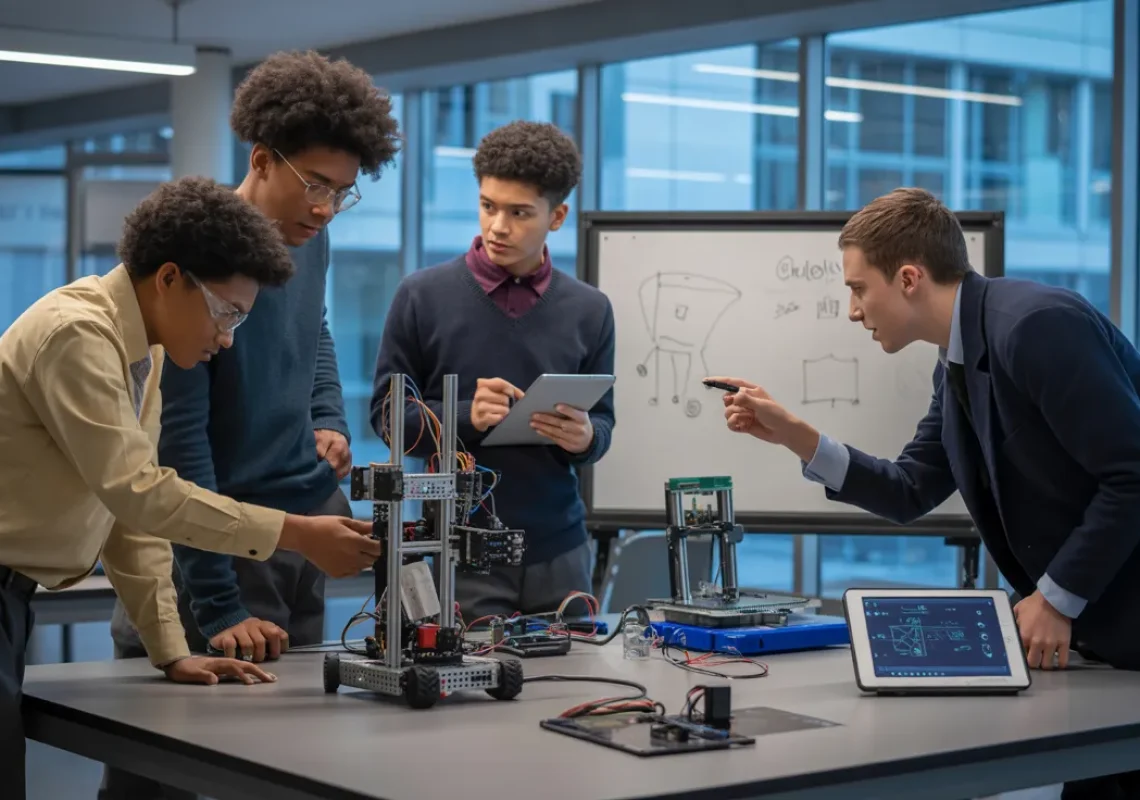
In today’s rapidly evolving world, the demand for individuals who possess not only technical proficiency but also strong collaboration, leadership, and innovation skills is at an all-time high. STEM (Science, Technology, Engineering, and Mathematics) competitions have emerged as powerful platforms to cultivate these essential competencies. These competitions provide participants with opportunities to tackle real-world problems, work in teams, and develop solutions that are both creative and practical. Engaging in STEM competitions allows individuals to push the boundaries of their knowledge, think critically, and collaborate effectively, all while fostering a spirit of innovation that is crucial for success in the modern workforce.
The Power of Experiential Learning in STEM Competitions
Experiential learning, the process of learning through experience and reflection, lies at the heart of many STEM competitions. Unlike traditional classroom settings, these competitions immerse participants in hands-on challenges that require them to apply theoretical knowledge to practical situations. This approach not only enhances understanding but also encourages critical thinking and problem-solving skills. By engaging in real-world scenarios, participants learn to navigate complexities, make informed decisions, and adapt to changing circumstances, all of which are vital skills in today’s dynamic world.
Fostering Collaboration Through Team-Based Challenges
Collaboration is a cornerstone of success in STEM competitions. These events often involve team-based challenges that require participants to work together towards a common goal. Through these collaborative efforts, individuals learn the importance of communication, trust, and collective problem-solving. Working in diverse teams exposes participants to different perspectives and ideas, enriching the problem-solving process and leading to more innovative solutions. The ability to collaborate effectively is a skill that transcends the confines of competitions and is highly valued in professional environments.
Developing Leadership Skills in Competitive Environments
Leadership is not just about taking charge; it’s about inspiring and guiding a team towards achieving a common objective. STEM competitions provide a unique environment where individuals can step into leadership roles, whether as team leaders or through leading specific aspects of a project. These experiences help participants develop key leadership qualities such as decision-making, accountability, and the ability to motivate and support team members. The challenges faced during these competitions often require quick thinking and adaptability, further honing leadership skills that are applicable in various aspects of life.
Encouraging Innovation Through Problem-Solving
Innovation is the driving force behind progress, and STEM competitions are fertile ground for cultivating this mindset. Participants are often tasked with solving complex problems that require creative and out-of-the-box thinking. These challenges push individuals to explore new ideas, experiment with different approaches, and develop solutions that are both effective and novel. The iterative nature of problem-solving in these competitions teaches participants the value of persistence and resilience, as they refine their ideas and approaches to overcome obstacles.
Building Resilience Through Overcoming Challenges
STEM competitions are not without their challenges. Participants often encounter obstacles that test their knowledge, skills, and perseverance. However, these challenges provide valuable opportunities for growth. Overcoming difficulties in a competitive setting builds resilience, teaching individuals how to handle setbacks and continue striving towards their goals. The experience of facing and overcoming challenges in STEM competitions instills a sense of confidence and determination that extends beyond the competition itself, preparing individuals for future endeavors.
Enhancing Communication Skills in High-Pressure Situations
Effective communication is crucial in STEM competitions, where participants must convey complex ideas and solutions clearly and persuasively. Whether presenting findings to judges, collaborating with team members, or explaining concepts to a broader audience, strong communication skills are essential. These competitions provide a platform for individuals to practice and refine their ability to articulate ideas, listen actively, and engage in constructive discussions. The high-pressure environment of these events further hones communication skills, preparing participants for professional settings where clear and effective communication is key.
Preparing for Future Careers Through STEM Competitions
Participation in STEM competitions offers more than just academic benefits; it serves as a stepping stone towards future careers. The skills developed – collaboration, leadership, innovation, resilience, and communication – are highly sought after by employers across various industries. Involvement in these competitions demonstrates initiative, problem-solving abilities, and a commitment to continuous learning. Additionally, the experience gained can enhance resumes and provide a competitive edge in job markets. For those considering careers in STEM fields, these competitions offer a practical and impactful way to gain relevant experience and showcase capabilities to potential employers.
Accessing Opportunities in STEM Competitions
While the benefits of STEM competitions are clear, accessing these opportunities can sometimes be challenging. However, organizations like Kieve Wavus Education are working to bridge this gap by offering programs that make participation more accessible. Kieve Wavus Education provides a range of experiential learning programs designed to cultivate leadership, collaboration, and innovation skills among youth. Through initiatives such as The Leadership School and various camps, they offer platforms for young individuals to engage in STEM-related activities and competitions, fostering the development of essential skills in a supportive and inclusive environment.
Conclusion: Embracing the Future Through STEM Competitions
In conclusion, STEM competitions play a pivotal role in developing the collaboration, leadership, and innovation skills necessary for success in today’s world. By providing hands-on experiences, fostering teamwork, encouraging creative problem-solving, and building resilience, these competitions prepare individuals for the challenges and opportunities of the future. Organizations like Kieve Wavus Education are instrumental in making these experiences accessible, ensuring that more young people have the chance to develop the skills that will empower them to contribute positively to society. Embracing participation in STEM competitions is not just about competing; it’s about investing in personal growth and preparing for a future where these skills are paramount.