
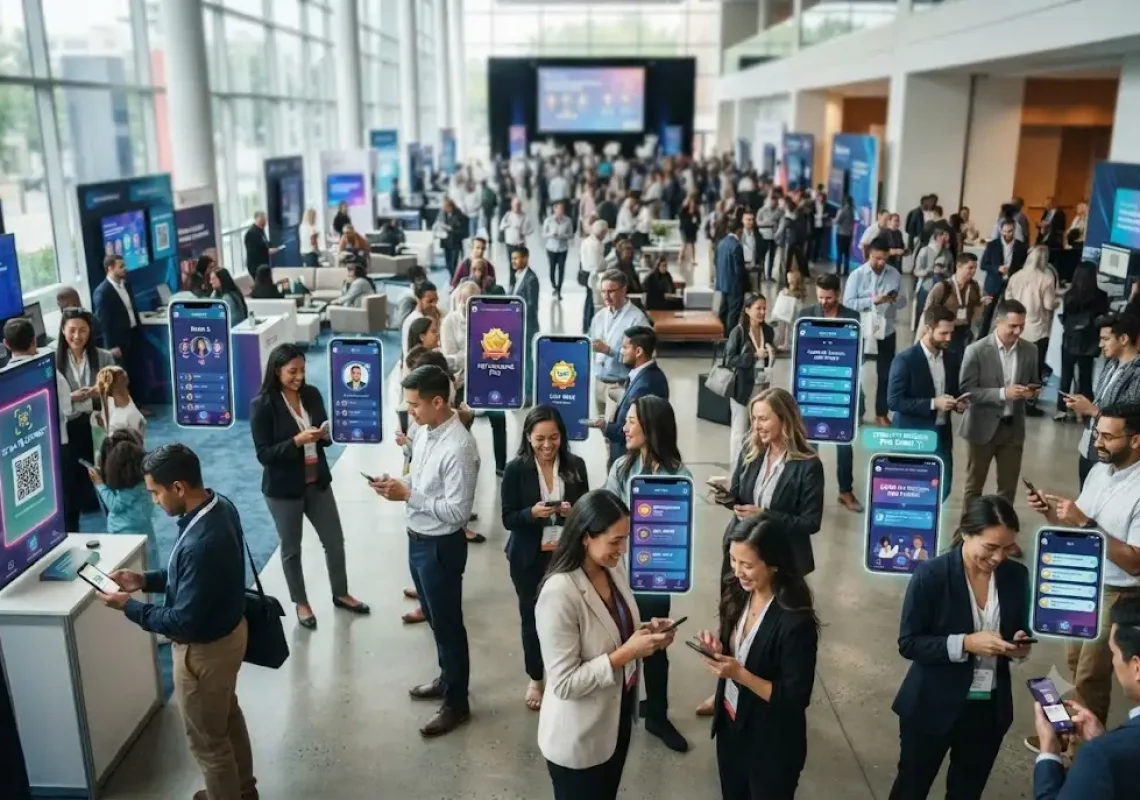
Event gamification is transforming conferences, trade shows, workshops, corporate meetings, and virtual events by making attendee participation more interactive and rewarding. Rather than expecting participants to simply watch presentations or visit exhibition booths, organizers use game-inspired elements such as challenges, points, badges, quizzes, and leaderboards to encourage active involvement.
As both in-person and virtual events become increasingly competitive, gamification helps organizers improve attendee satisfaction, increase networking opportunities, and create memorable experiences that encourage future participation.
What Is Event Gamification?
Event gamification is the process of incorporating game mechanics into event experiences to motivate attendees to participate in activities, interact with exhibitors, attend sessions, and connect with other participants.
Rather than focusing solely on entertainment, gamification supports event objectives by encouraging behaviors that create greater value for attendees, sponsors, and organizers alike.
Common gamification elements include:
- Points and scoring systems
- Achievement badges
- Digital passports
- Leaderboards
- Interactive quizzes
- Photo challenges
- Scavenger hunts
- Networking missions
- Prize drawings
- Completion rewards
Why Event Gamification Matters
Modern attendees expect engaging experiences instead of passive presentations. Gamification creates opportunities for participants to interact with event content while encouraging exploration and collaboration.
Benefits include:
- Higher attendee participation
- Improved networking
- Longer session attendance
- Better sponsor engagement
- Increased mobile app usage
- Higher attendee satisfaction
- Improved event feedback
By making participation rewarding, organizers can significantly improve the overall event experience.
Gamification for Events: Popular Strategies
Gamification for events can be customized for conferences, educational seminars, product launches, trade exhibitions, and community gatherings.
Scavenger Hunts
Participants earn points by visiting exhibitor booths, scanning QR codes, or completing specific event activities.
Trivia Competitions
Interactive quizzes encourage attendees to learn more about speakers, sponsors, or educational sessions while competing for rewards.
Networking Challenges
Attendees receive points for meeting new participants, exchanging digital business cards, or joining discussion groups.
Session Participation Rewards
Event apps can reward users for attending keynote presentations, workshops, or breakout sessions.
Virtual Event Gamification
Virtual event gamification has become increasingly important as organizations host webinars, online conferences, and hybrid events.
Since remote attendees may face distractions, gamification helps maintain focus and participation throughout the event.
Popular virtual engagement features include:
- Live polls
- Interactive quizzes
- Real-time leaderboards
- Virtual achievement badges
- Session completion rewards
- Networking challenges
- Digital treasure hunts
These activities create a more immersive online experience while encouraging attendees to remain active throughout the event.
Virtual Events Gamification for Hybrid Conferences
Virtual events gamification also helps bridge the gap between in-person and remote participants during hybrid conferences.
Using a shared event platform, both audiences can:
- Compete in the same challenges
- Participate in live Q&A sessions
- Earn achievement badges
- Join networking games
- Collect points throughout the event
This approach creates a consistent experience regardless of attendance format.
Virtual Event Gamification Ideas
If you’re planning an online event, consider these virtual event gamification ideas:
- Daily attendance streaks
- Knowledge quizzes after each session
- Digital bingo cards
- Leaderboard competitions
- Virtual escape room activities
- Interactive team challenges
- Social media participation rewards
- Photo contests
- Random prize draws
- Achievement certificates
Simple mechanics often deliver the highest participation because they are easy for attendees to understand.
Choosing the Right Event Gamification App
An event gamification app simplifies participant engagement while giving organizers valuable performance insights.
Useful features include:
- QR code scanning
- Live leaderboards
- Push notifications
- Digital badges
- Progress tracking
- Interactive maps
- Networking tools
- Survey integration
- Reward redemption
- Real-time analytics
A centralized app allows organizers to manage activities while providing attendees with a seamless digital experience.
Benefits for Event Organizers and Sponsors
Higher Engagement
Interactive activities encourage attendees to participate throughout the event instead of attending only keynote sessions.
Improved Networking
Gamified networking challenges make it easier for participants to connect with speakers, exhibitors, and fellow attendees.
Better Sponsor Visibility
Exhibitors receive more booth visits through reward-based challenges and interactive activities.
Valuable Event Analytics
Gamification platforms generate detailed insights into attendee behavior, helping organizers improve future events.
Artificial Intelligence and Event Gamification
Artificial intelligence is making event gamification more personalized by recommending sessions, suggesting networking opportunities, and creating customized challenges based on attendee interests.
To understand how intelligent engagement systems are evolving, read our guide on AI gamification, which explains how adaptive technologies improve user experiences across industries.
Lessons from Other Gamified Industries
The engagement strategies used at events closely resemble those found in ecommerce, banking, and wellness platforms.
For example, our article on ecommerce gamification explores how retailers build customer loyalty using rewards, while gamification in banking demonstrates how financial institutions encourage customer participation through personalized incentives.
Best Practices for Successful Event Gamification
To maximize results, event organizers should:
- Keep rules simple and easy to understand.
- Align rewards with event goals.
- Offer meaningful incentives rather than excessive prizes.
- Encourage collaboration as well as competition.
- Use real-time feedback and progress tracking.
- Ensure accessibility for both in-person and virtual attendees.
Well-designed experiences focus on participation and learning rather than competition alone.
The Future of Event Gamification
The future of event gamification will include AI-powered personalization, augmented reality experiences, wearable technology integration, immersive virtual environments, and predictive engagement analytics.
As event technology advances, organizers will be able to deliver highly customized experiences that adapt to individual attendee preferences while improving networking, education, and overall satisfaction.
Conclusion
Event gamification has become an essential strategy for creating engaging conferences, meetings, exhibitions, and virtual experiences. By incorporating challenges, rewards, leaderboards, and interactive activities, organizers can increase participation, strengthen networking, and improve attendee satisfaction.
Whether hosting an in-person conference, a hybrid meeting, or a fully virtual event, thoughtful gamification creates memorable experiences that encourage attendees to stay engaged from beginning to end.
For additional guidance on organizing engaging meetings and conferences, visit the Professional Convention Management Association (PCMA), a trusted resource for event professionals.