
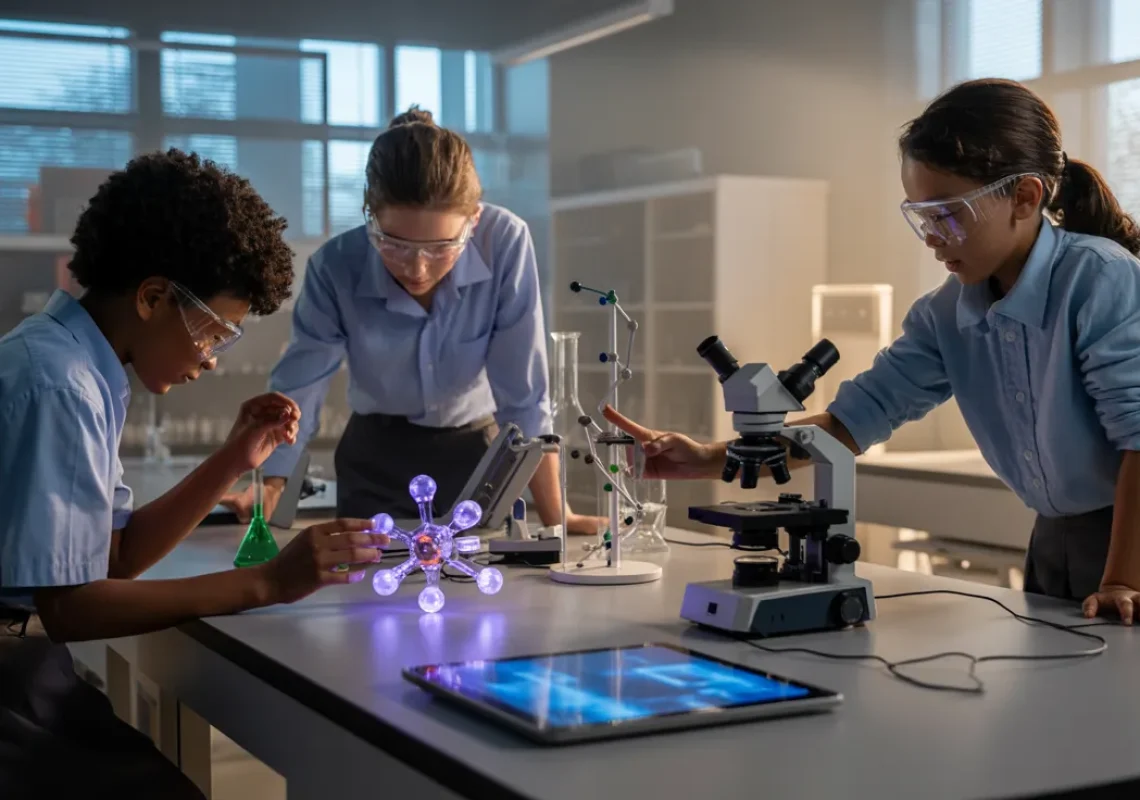
In the rapidly evolving world of education, traditional methods often fall short in capturing the imagination and curiosity of students. The static nature of textbooks and the limited engagement of conventional teaching techniques can make complex STEM (Science, Technology, Engineering, and Mathematics) concepts seem abstract and inaccessible. However, the advent of interactive labs has revolutionized this landscape, offering dynamic and immersive learning experiences that bring these subjects to life.
The Rise of Interactive Labs in Education
Interactive labs are digital or physical environments where students can engage with scientific concepts through hands-on experiments, simulations, and real-time data analysis. These labs provide a platform for learners to explore, hypothesize, test, and observe outcomes in a controlled setting, fostering a deeper understanding of the material. The integration of technology into these labs allows for the visualization of complex phenomena, making abstract ideas more tangible and comprehensible.
Bridging the Gap Between Theory and Practice
One of the most significant advantages of interactive labs is their ability to bridge the gap between theoretical knowledge and practical application. In traditional classrooms, students often struggle to connect what they learn in textbooks to real-world scenarios. Interactive labs address this by providing opportunities to apply theoretical concepts in practical settings, thereby enhancing problem-solving skills and critical thinking. For instance, a student learning about chemical reactions can conduct virtual experiments to observe the effects of different variables, solidifying their understanding through experience.
Engaging Multiple Learning Styles
Every student has a unique learning style, and interactive labs cater to this diversity by offering various modes of engagement. Visual learners can benefit from simulations and animations that depict scientific processes. Auditory learners can listen to explanations and discussions embedded within the lab activities. Kinesthetic learners can manipulate virtual instruments and conduct experiments, satisfying their need for hands-on involvement. This multimodal approach ensures that all students have access to effective learning experiences, increasing retention and comprehension.
Fostering Collaboration and Communication
Interactive labs often incorporate collaborative features that encourage students to work together, share findings, and discuss results. This collaborative environment mirrors real-world scientific research, where teamwork and communication are essential. By engaging in group activities within these labs, students develop interpersonal skills, learn to articulate their ideas clearly, and appreciate the value of diverse perspectives in problem-solving. Such experiences prepare them for future careers in STEM fields, where collaboration is a cornerstone of innovation.
Providing Instant Feedback and Assessment
Traditional assessments often provide feedback after a delay, limiting the opportunity for students to correct misunderstandings promptly. Interactive labs, however, offer immediate feedback during the learning process. As students conduct experiments or simulations, they receive real-time responses to their actions, allowing them to adjust their approach and deepen their understanding. This immediate feedback loop not only reinforces learning but also motivates students to persist in their exploration and inquiry.
Supporting Diverse Educational Environments
Interactive labs are versatile tools that can be implemented in various educational settings, from traditional classrooms to remote learning environments. In areas where access to physical lab facilities is limited, virtual labs provide an invaluable resource, ensuring that all students have the opportunity to engage with STEM education. Moreover, these labs can be accessed outside of regular school hours, offering flexibility for students to learn at their own pace and convenience.
Enhancing Teacher Effectiveness
Teachers play a pivotal role in guiding students through the learning process, and interactive labs serve as powerful tools to enhance their teaching effectiveness. These labs provide educators with resources to demonstrate complex concepts, facilitate interactive discussions, and assess student progress. By integrating interactive labs into their teaching strategies, educators can create more engaging and impactful lessons that resonate with students and foster a love for learning.
Preparing Students for Future Challenges
The world is increasingly driven by technology and innovation, and a strong foundation in STEM education is crucial for future success. Interactive labs equip students with the skills and knowledge necessary to navigate and thrive in this landscape. By engaging with these labs, students develop critical thinking, problem-solving, and analytical skills that are essential in the modern world. Furthermore, exposure to real-world applications of STEM concepts prepares them for careers in fields that are shaping the future, such as artificial intelligence, biotechnology, and environmental science.
Conclusion
Interactive labs have transformed STEM education by making learning more engaging, accessible, and effective. Through hands-on experiences, real-time feedback, and collaborative opportunities, these labs foster a deeper understanding of scientific concepts and prepare students for future challenges. As education continues to evolve, the integration of interactive labs will play an increasingly vital role in shaping the next generation of innovators and problem-solvers.