
Why STEM Competitions Are a Game-Changer for Students
In today’s fast-paced, technology-driven world, students can no longer rely solely on classroom theory to thrive in professional and personal arenas. STEM competitions offer a dynamic, hands-on experience where learners confront real-world challenges, think critically, and innovate under pressure. These events are not just about winning trophies or accolades; they are intense incubators for collaboration, leadership, and problem-solving. Imagine a room buzzing with young minds, each team strategizing and debating, pencils scratching against paper, and fingers flying across keyboards, while prototypes hum, whirr, and light up with possibility. The energy is electric, and the pressure is palpable – every decision counts. For inspired educators, witnessing students transform from tentative thinkers into confident, decisive leaders is nothing short of exhilarating. They watch as abstract lessons crystallize into tangible skills, fueling a sense of urgency to participate in these life-altering competitions before their students miss out on the edge that could define their future success.
Building Teamwork Skills Through High-Stakes Challenges
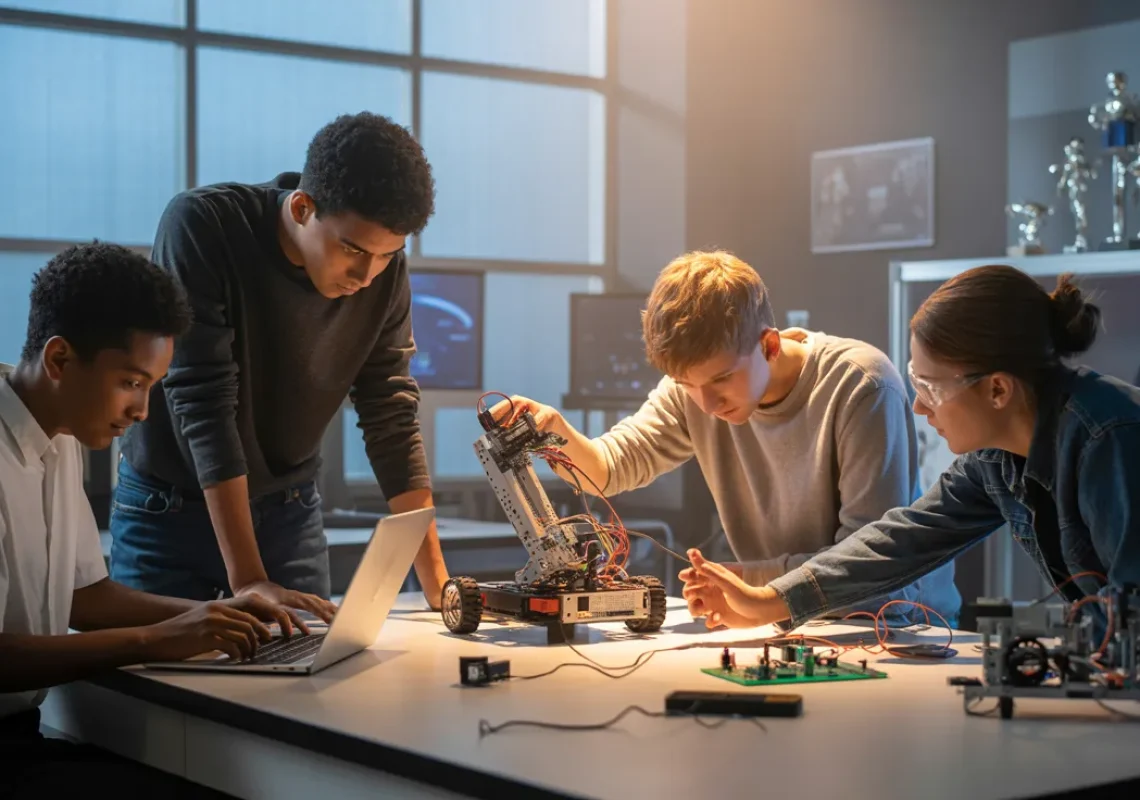
Collaboration is no longer optional; it’s a survival skill. STEM competitions immerse students in environments where every voice matters, and every action has immediate consequences. Teams are thrust into scenarios where cooperation, compromise, and communication determine success or failure. Picture a robotics challenge where circuits spark, sensors blink, and time slips away – students must coordinate, delegate, and trust one another instinctively. Inspired educators see firsthand how shy students discover confidence in leadership roles, while naturally assertive students learn the art of listening. The tactile experience of physically building, coding, and troubleshooting alongside peers generates empathy and a shared sense of responsibility that no lecture or textbook can replicate. These competitions transform classrooms into microcosms of real-world workplaces, preparing students for collaborative environments in industries ranging from aerospace to biomedical engineering.
Leadership Emerges in the Pressure Cooker of Competition
Leadership is forged under pressure, and STEM competitions provide an unparalleled crucible. As deadlines approach and technical challenges mount, students are forced to step into roles that require decisiveness, delegation, and strategic thinking. The sensory intensity of these moments – the whir of machines, the glow of monitors, the quiet hum of concentrated minds – creates a thrilling urgency that pushes participants to rise to the occasion. Inspired educators witness students taking ownership of tasks they never imagined tackling, guiding peers through problem-solving processes, and making split-second decisions with far-reaching consequences. This immersive, high-stakes environment cultivates leaders who can navigate uncertainty, inspire collaboration, and translate abstract concepts into actionable outcomes. Unlike traditional classroom exercises, competitions provide instant feedback, enabling rapid growth and a visceral understanding of the impact of leadership in tangible, results-driven contexts.
Problem-Solving Under Real-World Constraints
In the controlled chaos of a STEM competition, students encounter challenges that mirror real-world problems with tight deadlines, limited resources, and unpredictable variables. For instance, in a renewable energy challenge, teams might have only a few hours to design a functional solar-powered device that meets specific performance criteria. Every decision – from material selection to energy conversion efficiency – requires critical thinking and creative problem-solving. Inspired educators observe how students learn to iterate, test, and optimize solutions rapidly, gaining resilience in the face of failure. The thrill of experimentation, the anxiety of potential mistakes, and the exhilaration of breakthrough moments combine to create a sensory-rich learning experience that embeds skills far deeper than any traditional curriculum. These intense problem-solving exercises equip students with the adaptability and ingenuity demanded in cutting-edge industries.
Enhancing Communication Skills Through Collaborative Presentations
STEM competitions demand more than technical prowess; they require participants to articulate complex ideas clearly, persuasively, and confidently. Students must present designs, explain processes, and defend decisions before judges, peers, and sometimes industry experts. Inspired educators see timid students blossom as they practice concise explanations, master visual storytelling, and learn to field challenging questions under pressure. The sensory aspects of presenting – the nervous energy in a room, the bright glare of projectors, the attentive silence of judges – heighten the urgency to communicate effectively. These experiences cultivate a suite of transferable skills: verbal fluency, persuasive reasoning, and the ability to simplify intricate concepts without losing substance. By integrating communication into technical challenges, competitions ensure students emerge as well-rounded professionals capable of inspiring, leading, and influencing in any field.
Fostering Creativity and Innovation
Creativity thrives when constraints challenge conventional thinking. STEM competitions force students to innovate, often in highly specific or unusual contexts. Imagine a challenge to build an underwater exploration device using limited materials, where teams must reconcile design feasibility with environmental considerations. Inspired educators witness the sparks of imagination as students sketch, prototype, and iterate, testing ideas that range from the audacious to the elegantly simple. The visual and tactile stimulation – machines whirring, lights flickering, parts being assembled – creates a highly engaging, almost cinematic atmosphere where ideas come to life. The urgency of deadlines and the palpable presence of peers striving for similar goals heightens focus and drives ingenuity. Students learn that innovation is iterative, collaborative, and often requires balancing bold thinking with practical execution.
Real-World Exposure and Networking Opportunities
Participation in STEM competitions offers students more than skill development; it provides gateways to real-world experiences, mentorship, and networking. Events often feature judges from leading industries, representatives from top universities, and former participants who have navigated successful STEM careers. Inspired educators recognize the transformative impact of these interactions: students gain insights into career pathways, industry expectations, and emerging technologies. The sensory immersion – the hum of conference centers, the tactile engagement with professional-grade tools, and the palpable excitement of seeing prototypes in action – creates an unforgettable experience. These competitions function as bridges between academic learning and professional application, giving students a competitive edge that can accelerate college admissions, scholarships, and early career opportunities.
Measuring Growth and Achievement in Tangible Ways
STEM competitions provide concrete, measurable feedback on both collaboration and leadership. Beyond scoring systems, students receive evaluations on teamwork, problem-solving efficiency, innovation, and presentation skills. Inspired educators use this data to assess growth over time, identifying strengths to nurture and areas requiring further development. For students, witnessing their progress through tangible metrics – prototype performance, peer evaluations, and formal recognition – fuels motivation and a sense of accomplishment. The multi-sensory environment, where students see their ideas materialize and hear peer reactions, enhances the emotional impact of these achievements. This accountability and validation create a strong FOMO-driven urgency for participation, ensuring that no student misses the chance to benchmark their growth against peers in a highly competitive, real-world-inspired setting.
Why Inspired Educators Should Champion STEM Competitions Now
The clock is ticking, and opportunities for meaningful STEM experiences are finite. Inspired educators must act urgently to integrate competitions into their teaching strategies to ensure students gain the skills, confidence, and networks essential for future success. Imagine the excitement of guiding students through the tension of deadlines, the exhilaration of a working prototype lighting up for the first time, or the pride of watching a student articulate a complex concept with clarity and poise. These moments are transformative, creating memories and competencies that last a lifetime. Industry data consistently shows that students who engage in STEM competitions outperform peers in leadership, problem-solving, and collaboration skills. Every moment of hesitation risks missing out on opportunities for mentorship, scholarships, and recognition. The call to action is clear: secure your students’ place in upcoming STEM competitions, ignite their potential, and empower them to lead, innovate, and collaborate at unprecedented levels. For the latest events, registration details, and resources, visit STEM Competitions Hub today and ensure your students are not left behind.